

Uncategorized
Onkyo: Reclaiming Stereo
Jun
When most people think of Onkyo today, the conversation usually begins with AV receivers, THX certification, and home cinema. Yet before Dolby Atmos, HDMI switching, and multi-channel cinema systems became closely associated with the brand, Onkyo was already deeply rooted in two-channel hi-fi.
Founded in Osaka, Japan in 1946 by Takeshi Godai, the company built its early reputation through stereo amplifiers, separates, and engineering-focused audio systems during the golden era of Japanese hi-fi. Throughout the 1970s and 1980s, models such as the Integra series amplifiers and the legendary M-5090 power amplifier helped establish Onkyo as a respected name among stereo enthusiasts — combining serious engineering with the large illuminated meters and physical presence that defined Japanese hi-fi during the era.
The ICON Series: a familiar instinct
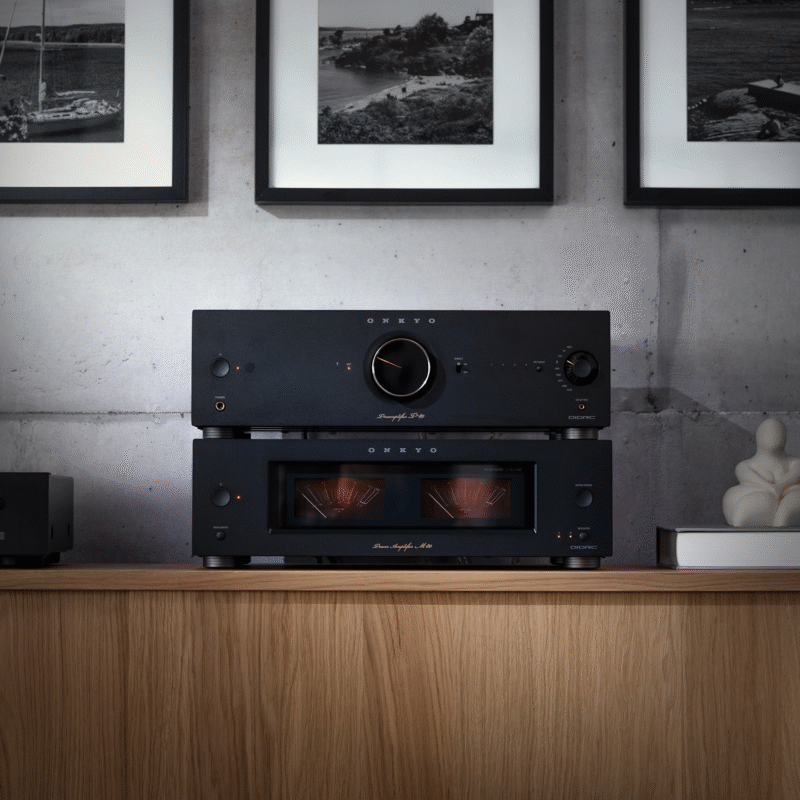
The arrival of the ICON Series feels like the re-emergence of that side of Onkyo. Rather than positioning itself purely around modern lifestyle convenience, the ICON Series revisits the traditional appeal of dedicated stereo hi-fi — separated pre/power architecture, physical interaction, and a visual identity that recalls the golden age of Japanese audio while remaining firmly designed for the modern streaming era.
A visual identity that recalls the golden age of Japanese audio, while remaining firmly designed for the modern streaming era.
P-80: Presence and intention
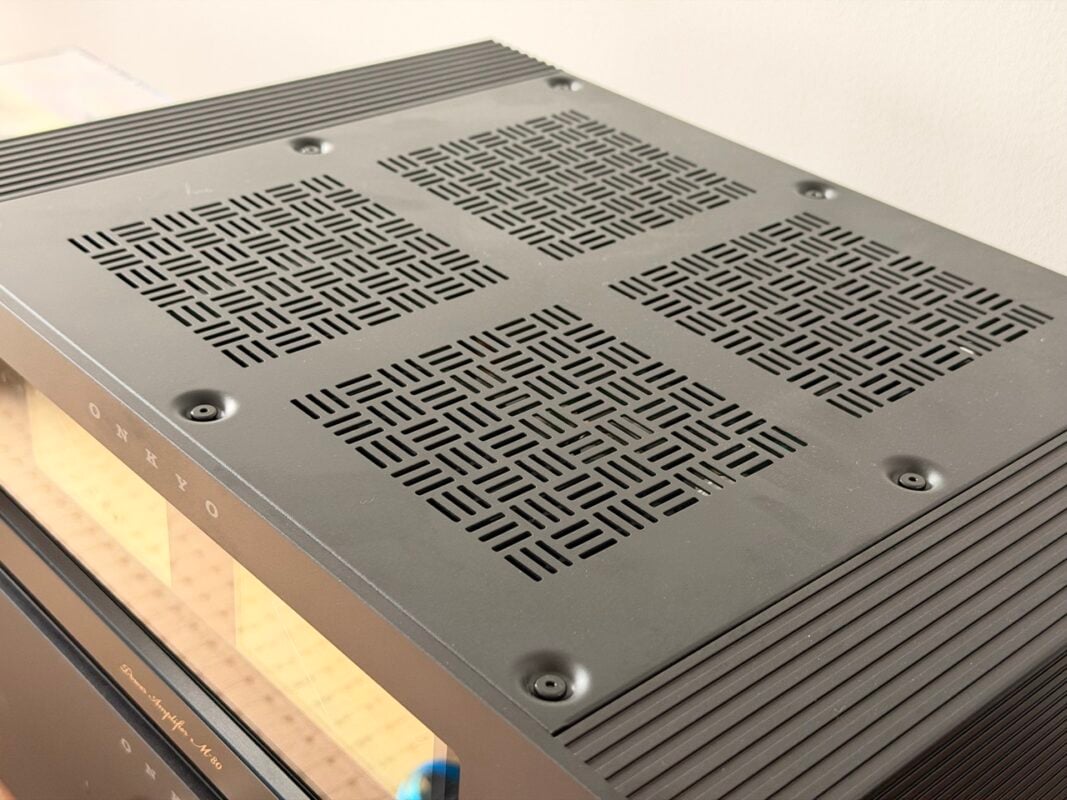
The ICON P-80 is more than simply a modern streaming preamplifier. Much like classic Japanese hi-fi separates from the 1970s and 1980s, its design places equal emphasis on visual presence and physical interaction. Looking closely at the chassis, even the ventilation pattern across the top panel feels intentional — subtly reminiscent of traditional Japanese tatami geometry rather than generic industrial design.
The centrally positioned illuminated volume control, symmetrical layout, and restrained front-panel design give the P-80 a sense of balance that feels distinctly Japanese in character.
M-80: Built to be seen and heard
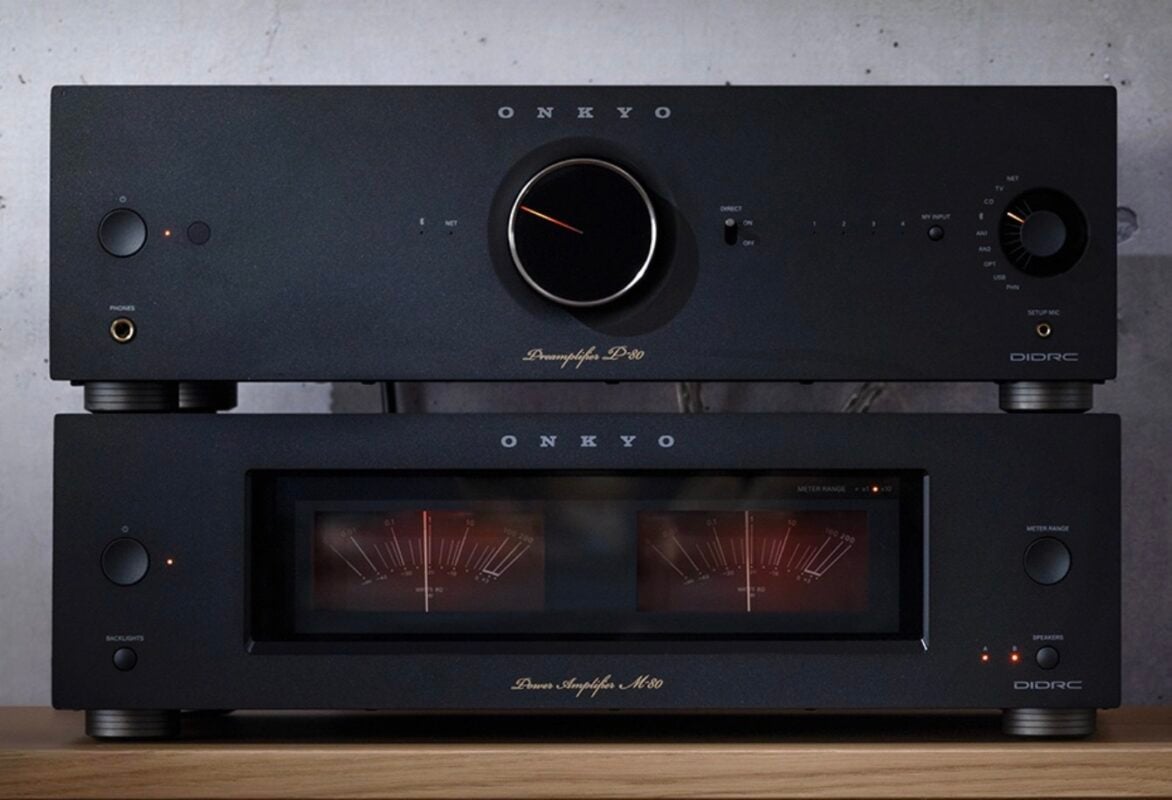
The matching ICON M-80 power amplifier continues the same philosophy. Its large illuminated power meters and symmetrical layout reinforce the idea of a dedicated stereo system designed to be seen as much as heard. Together, the P-80 and M-80 feel conceived as a complete stereo system rather than two separate standalone products.
Both units incorporate Onkyo’s proprietary DIDRC technology, designed to reduce high-frequency distortion within digital circuitry — helping to preserve clarity while maintaining the scale and energy associated with the brand’s amplification heritage.
In the showroom: ICON Series with Klipsch RF-7 III
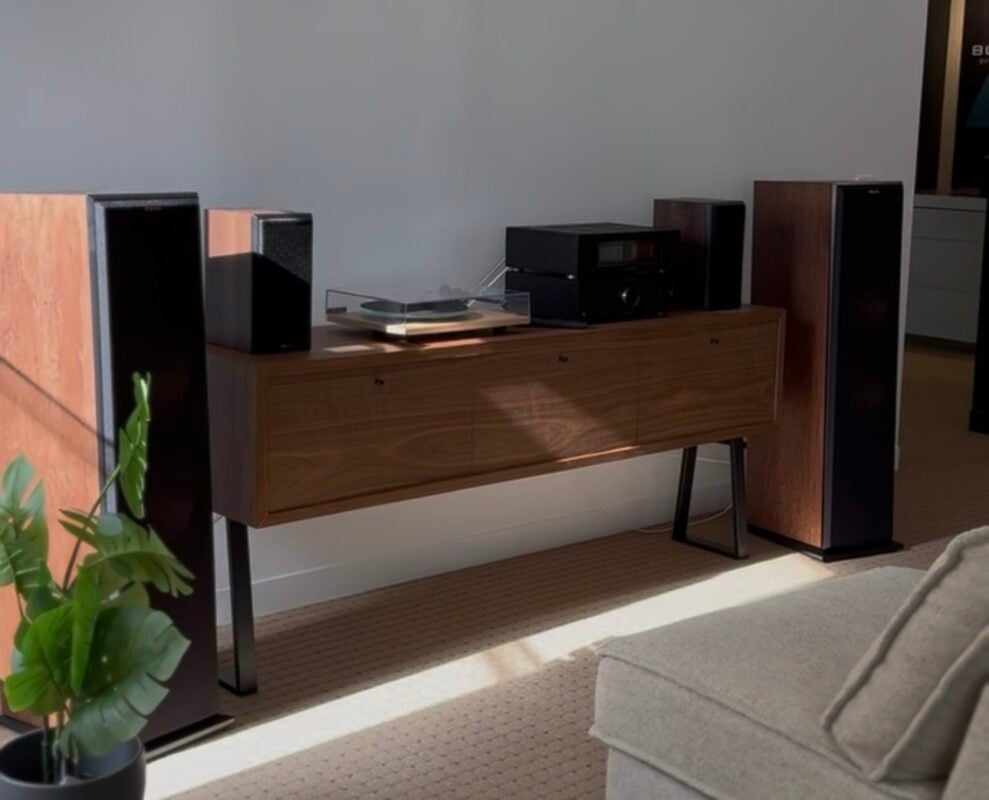
We are currently pairing the ICON Series with the Klipsch RF-7 III — loudspeakers whose dynamic character and physical scale complement the bold stereo identity of the P-80 and M-80 remarkably well. In our next blog, we will explore how this pairing translates into sound, and what the ICON Series reveals about Onkyo’s modern approach to two-channel hi-fi.

Now Available · St Kilda Showroom
Experience the Onkyo ICON Series for yourself
The ICON Series is now available for audition in our showroom. Come and hear what Onkyo’s renewed focus on dedicated two-channel hi-fi sounds like in person.
